


Fashion & apparel
Variant-heavy catalogues, with sizing and returns that behave.


Ecommerce website development, Shopify engineering and the custom software behind it — for brands that have outgrown templates.



Measured across 1,000+ projects and a decade — not marketing estimates.
Ecommerce is the specialty. The software around it — apps, SaaS, mobile, AI — is how we keep it running.
Stores built as software rather than configured from a template: Next.js or Vue.js on the front, Node.js or Laravel behind it, and a catalogue model that matches how you actually trade.
Build your store
Shopify and Shopify Plus builds, theme engineering, custom apps and migrations, written to be maintained by whoever comes next.
Scale on Shopify
Ordering platforms, portals and internal systems built around how your business works, rather than around what a product allows.
Scope your system
iOS and Android from a single codebase, connected to the catalogue, pricing and orders you already run.
Build your app
Support, triage and content operations automated against your own data — and measured on resolution, not on tickets deflected.
Automate the queue
Technical SEO, content and paid media measured against revenue, run by engineers who can change the store rather than only report on it.
Grow your traffic
Senior ecommerce, backend and mobile engineers embedded in your team, on your process and overlapping your business hours.
Add engineers
Four commitments in every contract — not just on the website.
The people who scope your build are the people who write it.
A written scope with the risks named, and a free consultation before it. No mystery quotes.
Board access and a staging link from the first sprint, in your timezone's overlap hours.
Maintenance, CRO and SEO handled by the team that built the store.
You get the board and the staging link from the first sprint, whatever the scope turns out to be.
We audit the current store, map the catalogue and every integration, and agree the architecture — which framework, which database model, what has to be migrated. You leave this stage with a written scope and a named risk list.
User flows and interface design worked through against your real catalogue, including the edge cases a template never shows. Nothing is built until you have approved what it will look like.
Storefront, commerce API and admin engineered in reviewable increments, with a staging link you can open at any point. You review working software rather than slide decks.
Payments, tax and duty, ERP, 3PL and analytics connected and reconciled against real orders rather than sample data. Each integration is proven with live test transactions.
Redirects, structured data and performance verified, then a cutover rehearsed against a clone of production. Launch day is a repeat of something we have already done.
Defects fixed under warranty, then maintenance, conversion work and SEO with the same engineers. The team that built the store is the team that answers.
No matter the industry, the approach is the same — understand the challenge, build the right thing, and ship results that hold. We have taken brands in retail, beauty, B2B and more from idea to launch.
Variant-heavy catalogues, with sizing and returns that behave.
Refills, bundles and subscriptions that keep customers.

Quantities, delivery slots and stock that stays honest.

Tiered pricing, quotes and account-based ordering.
Plans, usage limits and billing wired into the product.

White-label build capacity, shipped under your brand.

Software we build, sell and support — proof we can carry a product, not just a project.
“They rebuilt our checkout in 11 weeks. Conversion rose 38% and it hasn't dipped since.”
“Weekly staging releases meant zero surprises. It's the first agency build we didn't have to manage.”
“Quote on Monday, kickoff the next week, launch on the date they named. That's rare.”

When a hosted platform stops fitting, building custom becomes the cheaper option. Here is what that decision involves — what you own, what you take on, and what it does not automatically buy you.
· 11 min read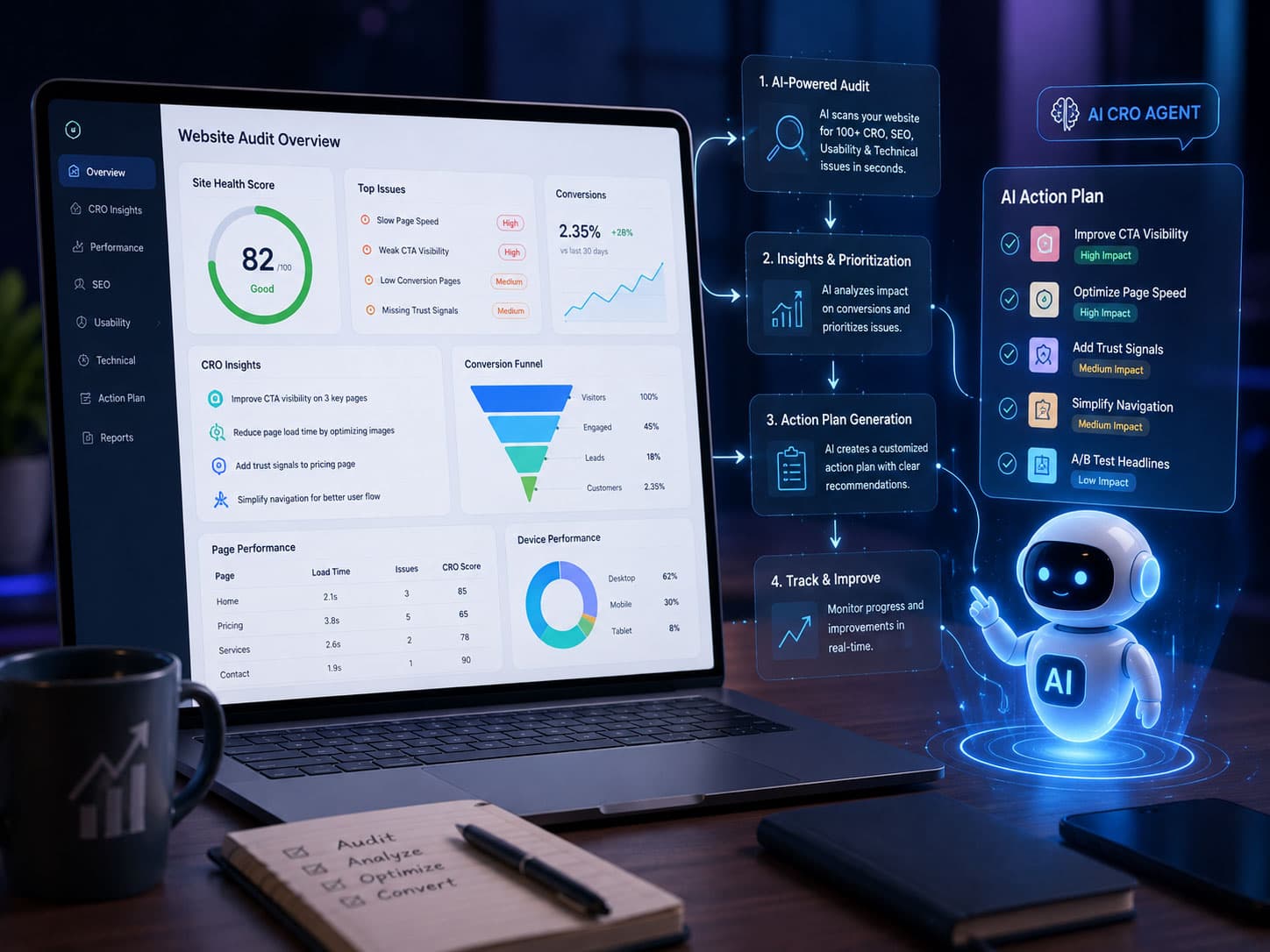
Learn how AI CRO agents automate e-commerce audits, diagnose checkout friction, and translate raw behavioural analytics into prioritised engineering action plans.
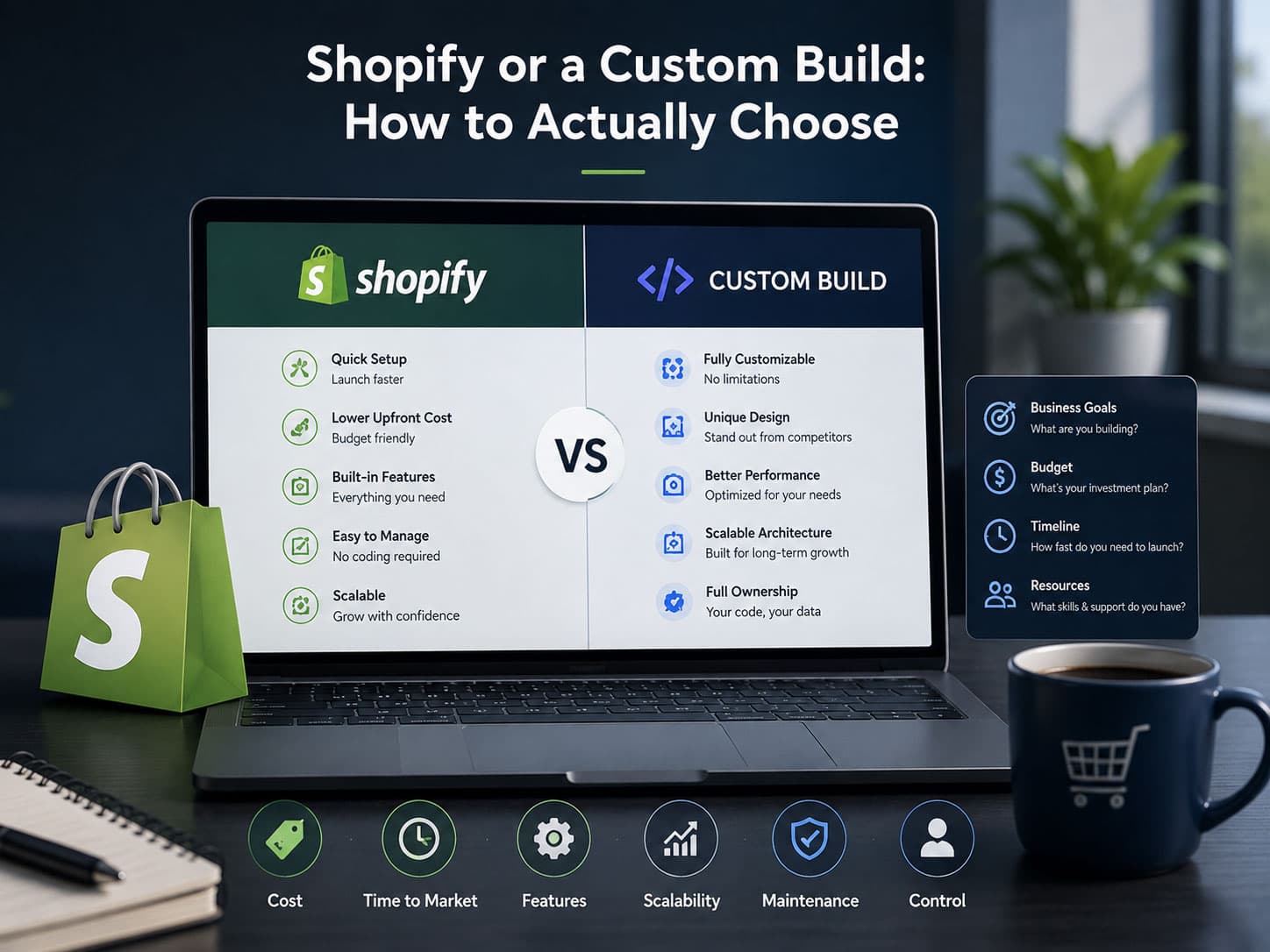
The comparison is usually framed as flexibility against convenience. That framing is wrong, and it leads people to rebuild stores that did not need rebuilding.
· 10 min readIt depends on scope, and we would rather say that than publish a number your project then contradicts. What moves it: how large and how complex the catalogue is, how many systems have to be integrated, whether you are migrating an existing store or starting clean, how much of the design is bespoke, and how much of the business logic the platform cannot already express.
Send a paragraph describing the store and what is wrong with it. You get a technical response with scope, the risks we can see, and a written proposal — at no cost, and with no obligation to proceed.
New website, a rebuild, Shopify, a mobile app, custom software or SEO — one paragraph is enough. You get scope, risks and a timeline back within one business day, from the engineer who would build it.