
The short answer
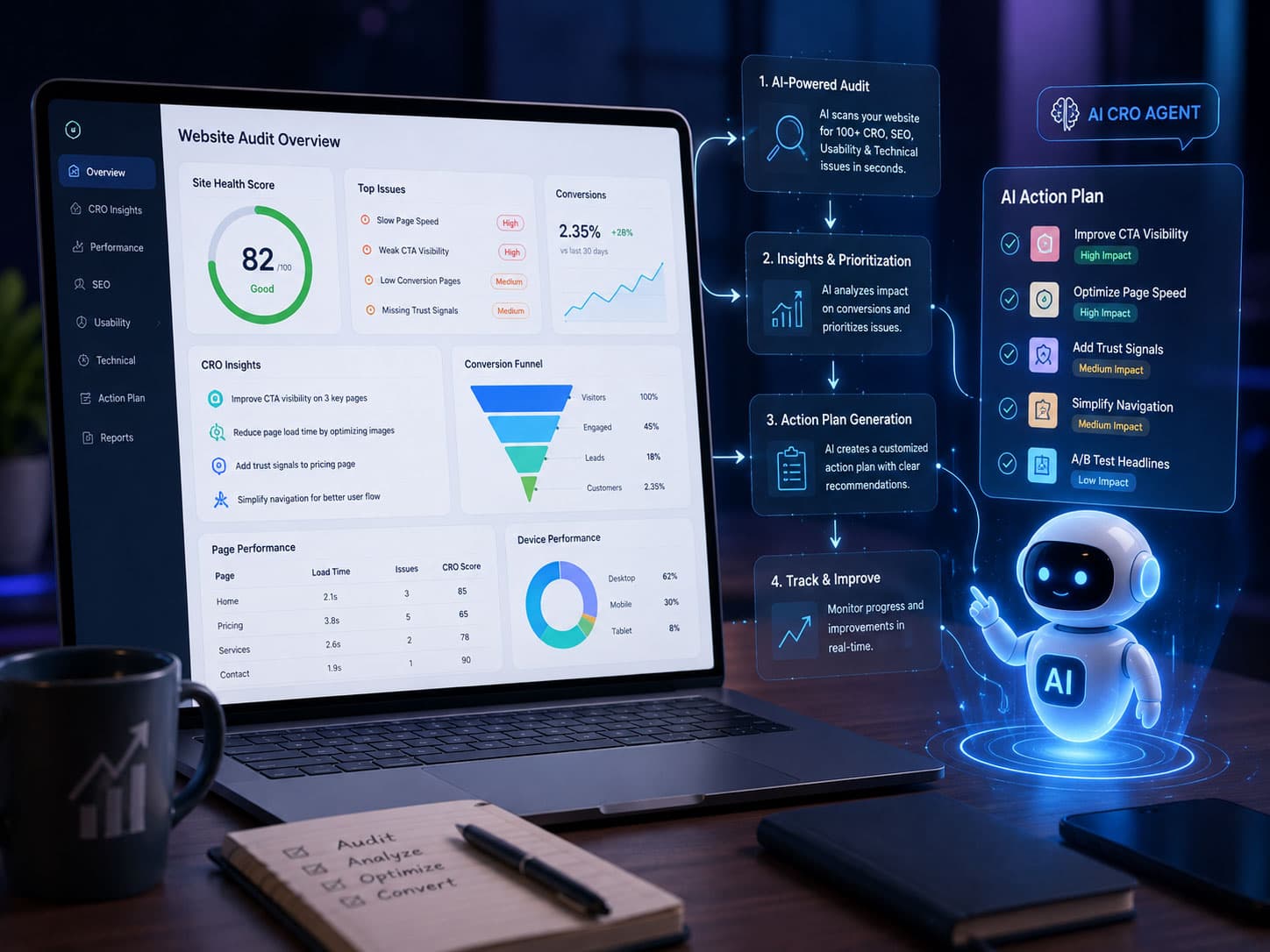
An automated CRO agent evaluates user behaviour, visual layout hierarchy, and checkout performance to produce website audit reports with structured action plans. Unlike passive analytics dashboards or periodic manual reviews, an AI CRO agent systematically identifies conversion bottlenecks and translates friction points into prioritised technical tasks for engineering teams.
The role of an AI CRO agent in conversion rate optimisation
A conversion rate optimisation (CRO) agent is an automated system that continuously audits website interfaces, user navigation flows, and behavioural analytics to pinpoint where revenue is lost. Rather than relying solely on periodic manual reviews by external consultants, online businesses use automated agents to diagnose conversion friction across product pages, cart drawers, and checkout steps.
Traditional optimisation workflows often stall between data collection and technical implementation. Standard analytics platforms display where users drop off, but they fail to explain why or what exact interface changes will resolve the issue. An AI CRO agent fills this gap by examining page elements, visual hierarchy, load performance, and form interactions, then generating specific, prioritised recommendations. Tools such as Smart CRO Agent streamline this diagnostic phase, turning raw analytics into actionable backlogs for engineering and design teams.
Comparing CRO audit methodologies
Selecting the right approach to site auditing depends on technical capacity, iteration frequency, and the speed at which your team can implement front-end changes.
| Audit Dimension | Manual CRO Consulting | Static Analytics Dashboards | AI CRO Agents |
|---|---|---|---|
| Analysis Speed | Requires several weeks of data aggregation and report compiling. | Real-time reporting of metrics, but zero automated diagnostic synthesis. | Instant audit generation based on continuously evaluated behavioural data. |
| Output Format | Static presentation decks and qualitative heuristic spreadsheets. | Quantitative tables, drop-off charts, and raw event counts. | Prioritised issue backlogs with concrete engineering specifications. |
| Execution Frequency | Periodic (quarterly or annual reviews). | Continuous passive monitoring. | Continuous automated auditing after every release or structural change. |
| Actionability | High strategic value, but often lacks front-end code guidance. | Low diagnostic value; requires human data scientists to interpret. | Direct translation into ticket-ready front-end and UX tasks. |
How an AI CRO agent builds an actionable audit report
Generating an effective audit report requires systematic evaluation across multiple site layers. An AI CRO agent follows a structured analytical pipeline to deliver actionable findings.
- Data ingestion and telemetry mapping: The agent collects user interactions, scroll depth, rage clicks, form field drop-offs, and device-specific rendering metrics.
- Visual and DOM analysis: The layout structure is parsed to check call-to-action visibility, mobile viewport constraints, contrast ratios, and visual noise near transaction triggers.
- Friction pattern identification: Machine learning models cross-reference observed user drop-offs with known UX anti-patterns, such as ambiguous form validation messages or slow-loading hero media.
- Impact and effort scoring: Detected issues are ranked by their proximity to transaction completion and the estimated development effort required to address them.
- Action plan generation: The audit tool exports structured technical tickets detailing the problem, visual evidence, suggested code or design fixes, and acceptance criteria for engineers.
Translating audit recommendations into engineering execution
An audit report is only valuable if your development team can execute its recommendations without ambiguity. When using platform-native tools or Smart CRO Agent, recommendations arrive formatted for immediate development backlogs.
For stores operating on specialized frameworks or headless architectures, optimizing user journeys involves precise changes across frontend code and backend APIs. Whether maintaining standard storefronts or implementing custom e-commerce website development, developers require unambiguous instructions. Common actionable findings produced by CRO agents include:
- Checkout field consolidation: Identifying redundant address or validation inputs that increase checkout friction on mobile viewports.
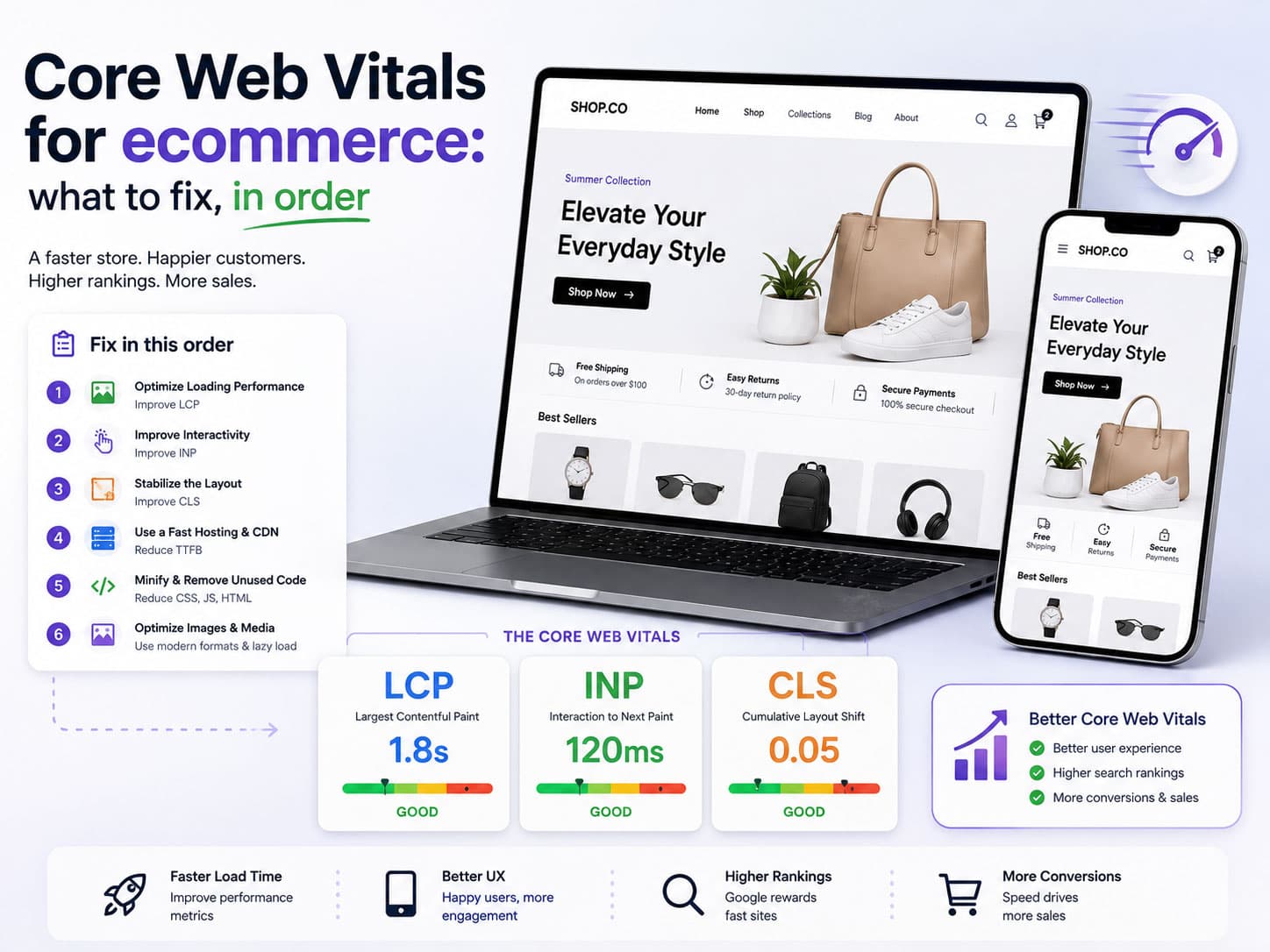
- Render-blocking resource removal: Flagging heavy third-party scripts or unoptimised images that delay Largest Contentful Paint (LCP) and cause layout shifts.
- Micro-copy and CTA placement: Adjusting sticky add-to-cart buttons and sticky mobile bars to remain within thumb reach without obscuring product detail content.
- Error state clarity: Standardising inline form error messages to prevent cart abandonment caused by silent submission failures.
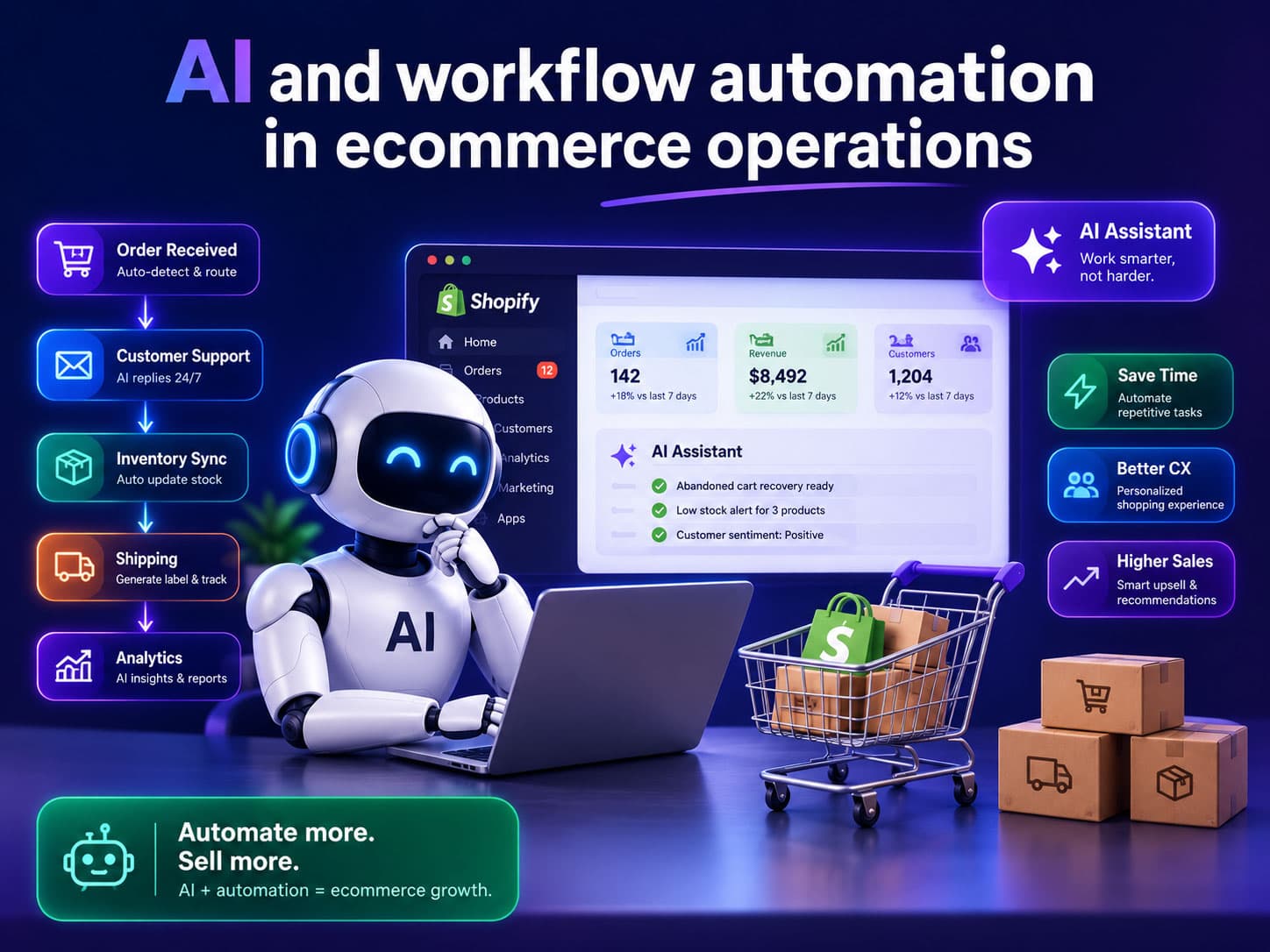
By connecting automated audit tools directly into your development workflow alongside broader AI and workflow automation initiatives, engineering teams spend less time diagnosing user friction and more time shipping targeted site enhancements.
Operationalising automated CRO audits for ongoing growth
Conversion rate optimisation is not a one-time project; it is an iterative software discipline. Deploying an AI CRO agent creates a feedback loop where site updates are automatically evaluated against subsequent user behaviour patterns. Integrating automated auditing platforms into your deployment pipeline ensures that new feature rollouts, layout refactors, or catalogue updates do not introduce hidden conversion bottlenecks.
Frequently asked questions
An AI CRO agent is an automated software tool that continuously analyses user interaction data, layout visual hierarchy, and checkout performance on an e-commerce website. It identifies conversion friction points and automatically generates prioritised audit reports with technical recommendations for developers and designers.

The engineers, architects and strategists who build Coder71's client work — storefronts, custom software, mobile apps and the automation behind them.
10+ years building ecommerce systems · Delivery across the US · Canada · the UK · Australia · Europe and the Middle East · Builders of Fastmart · Footprint and Wallpaper71